Webinar: Database Summer Cleaning
In this webinar, we discussed how to identify and clear out digital clutter across every layer of your database. We walked through how to clean up foundational tables, evaluate high-level coding structures, and set up routine audit processes to keep your data accurate and usable year-round. We hope you walked away with practical strategies you can put into action immediately to tackle quick database wins, evaluate your table codes, and build sustainable audit processes that support long-term data health.
A few highlights from the conversation include:
- Keep constituent codes high-level and intentional. Too many code options lead to clutter and broken reports. Keep your main list short (ideally 10 to 15 high-level categories like Board Member or Employee), establish a clear hierarchy, and lock down editing access so your database stays clean and scannable.
- Protect data health by tightening security and table permissions. Data clutter builds up when too many users can create table entries on the fly. Restrict admin-level access for adding table values and regularly review user security settings to prevent duplicate spellings, rogue attributes, and inconsistent entries.
- Build a gift coding structure designed for long-term growth. Design your campaign, fund, appeal, and package structure with overall strategy in mind, rather than building it one gift at a time. Keep years out of fund and campaign names, relying on gift dates for timing while keeping funds aligned with accounting rules and financial restrictions.
- An appeal should represent the main ask and packages drive the details. An appeal should represent the main ask: an event, direct mailing, or peer-to-peer outreach. Use packages to illustrate the segments within that appeal. For an event, this could include ticket sales, auction purchases, and cash call. For a direct mail appeal, it could be populations like current donors, LYBUNTs, SYBUNTs, and acquisitions.
- Commit to ongoing audit routines over one-time cleanups. Maintaining a database is like doing laundry: no matter how clean it gets, a new pile is always around the corner. Build sustainable audit routines, establish clear data standards, and conduct regular weekly check-ins to catch errors before they compound.
Related Posts
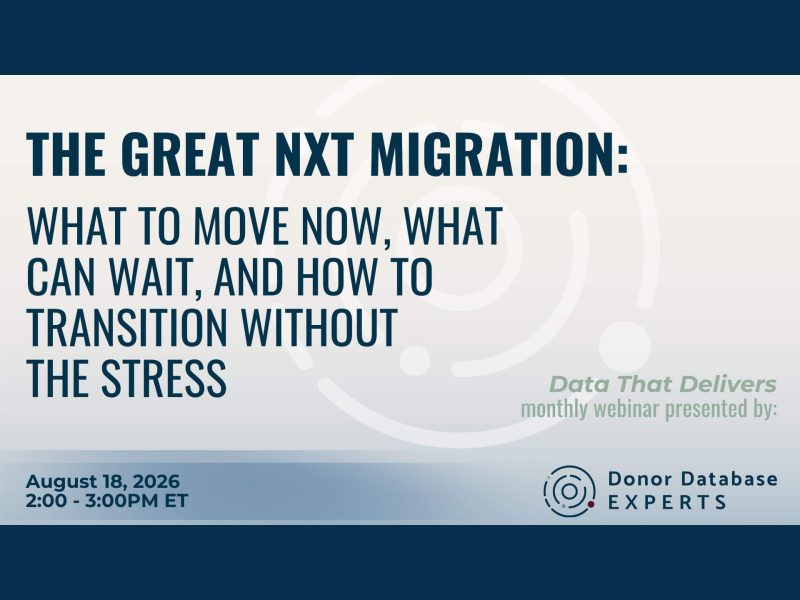
Webinar: The Great NXT Migration
Explore the Raiser's Edge NXT migration, including what to move to web view now, which features add value, and what can stay in Database View.
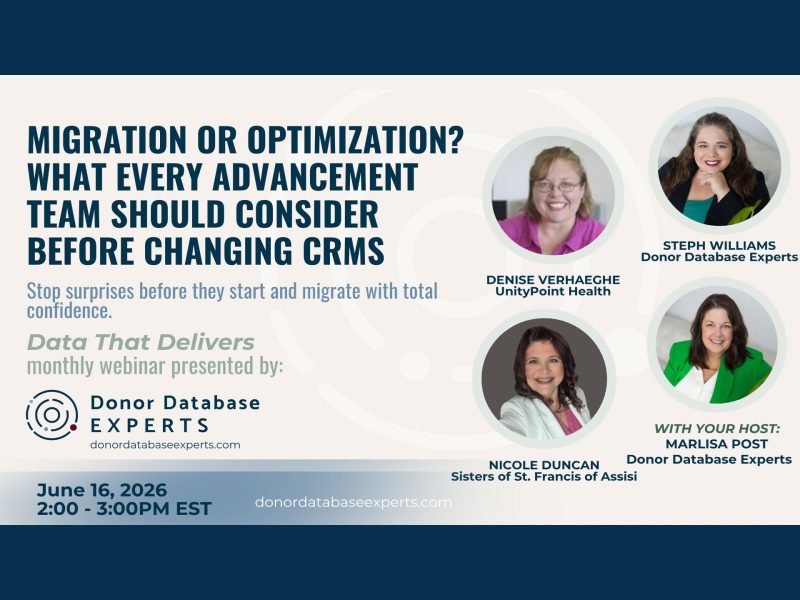
Webinar: Migration or Optimization? What to Consider Before Changing CRMs
In this webinar, we discussed how to sort through system frustrations, growth needs, and team readiness before making a major CRM move.
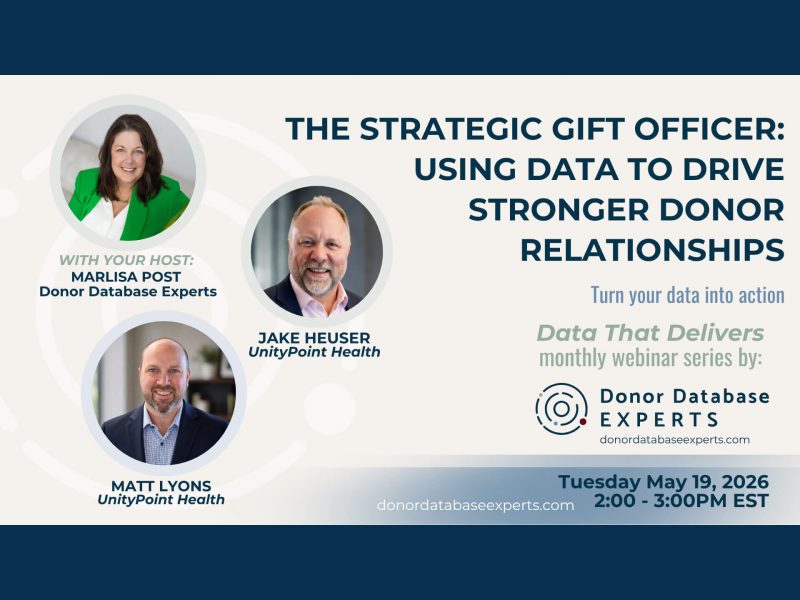
Webinar: Using Data to Drive Stronger Donor Relationships
Learn how utilizing customer relationship management (CRM) systems as strategic assets clarifies portfolio health and drives major gift success.