Webinar: Migration or Optimization? What to Consider Before Changing CRMs
In this webinar, we discussed how to sort through system frustrations, growth needs, and team readiness before making a major CRM move. We looked at what it actually takes to consolidate multiple databases, how to survive the aftermath of a merge, and how to know whether you really need a new system or just a thorough cleanup.
A few highlights from the conversation include:
-
Distinguish between a broken system and a broken process Before making the leap, pause to ask if you have truly outgrown your software’s core capabilities or if your frustrations are actually caused by fixable data health, configuration, or training gaps.
-
Tackle data optimization under one roof Consolidating your databases first and cleaning up after the merge allows you to translate different data languages and execute mass updates much easier than trying to scrub messy spreadsheets beforehand.
-
Commit to a clean break and ongoing governance Set realistic internal expectations for an 18-month timeline, enforce a strict cut-over date to avoid the chaos of managing two active systems, and deploy immediate data health checks to keep your new environment clean.
Related Posts
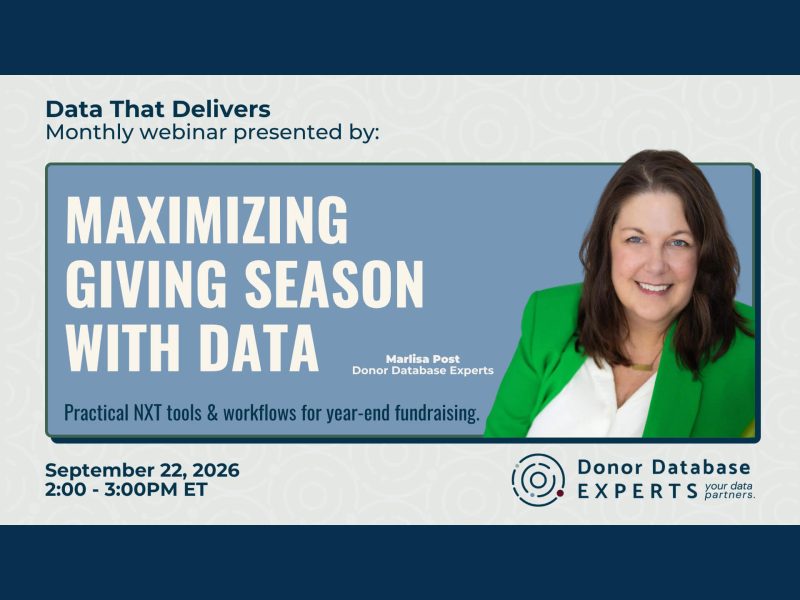
Webinar: Maximize Giving Season with Data
Learn how data cleanup, donor segmentation, flexible giving options, and thoughtful stewardship can strengthen year-end fundraising.
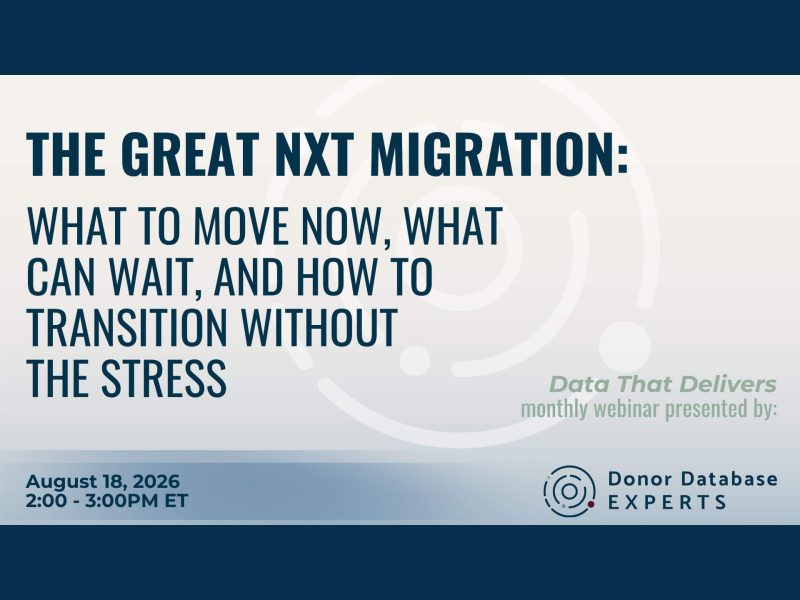
Webinar: The Great NXT Migration
Explore the Raiser's Edge NXT migration, including what to move to web view now, which features add value, and what can stay in Database View.
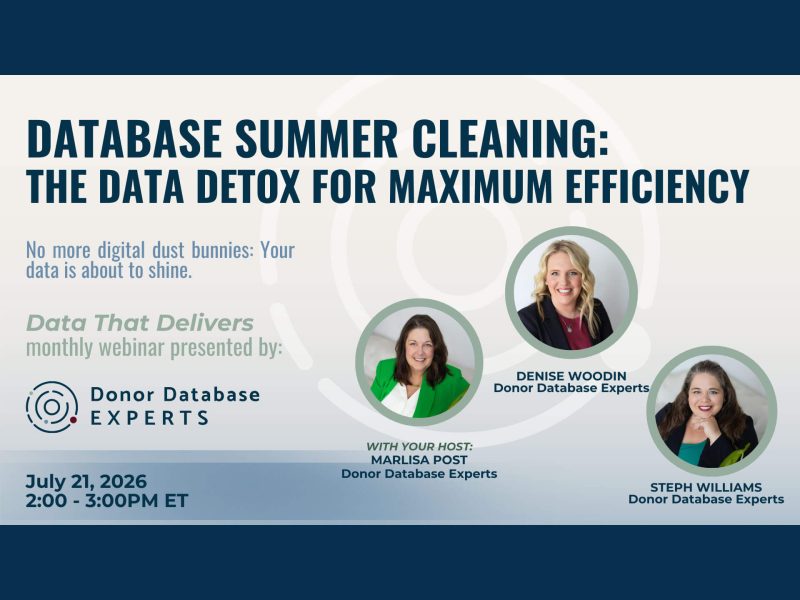
Webinar: Database Summer Cleaning
In this webinar, we discussed how to identify and clear out digital clutter across every layer of your database.